
Why Do Mycoplasma Infections in Poultry Incur High Mortality? Unveiling Bacteriophage Targeted Solutions
—— Bacteriophages Fortify Biological Security and Halt Secondary Colibacillosis

In practical poultry production, producers face an acute dilemma: once flocks contract Mycoplasma (such as Mycoplasma synoviae or Mycoplasma gallisepticum) or viral respiratory challenges (such as infectious bronchitis or Newcastle disease), heavy mortalities persist despite targeted pharmaceutical interventions. In truth, primary Mycoplasma or viral infections rarely account for catastrophic mortality alone. The true commercial devastation is driven by secondary opportunistic bacterial infections—most notably Avian Pathogenic Escherichia coli (APEC). Farm technicians frequently characterize Mycoplasma and secondary bacteremia as "twin brother diseases" that strike concurrently. When confronting this compounded pathology, what sustainable, non-antibiotic bio-precision solutions exist beyond escalating conventional antimicrobials?
1. Etiological Tracing: Why Do Mycoplasma Infections Trigger Lethal Bacterial Complications?
In avian physiological defense, healthy respiratory mucosa acts as the primary mechanical and immunological barrier against environmental pathogens. Mycoplasma deploys sophisticated mechanisms to disintegrate this protective barrier, paving a frictionless path for aggressive bacterial invasion:
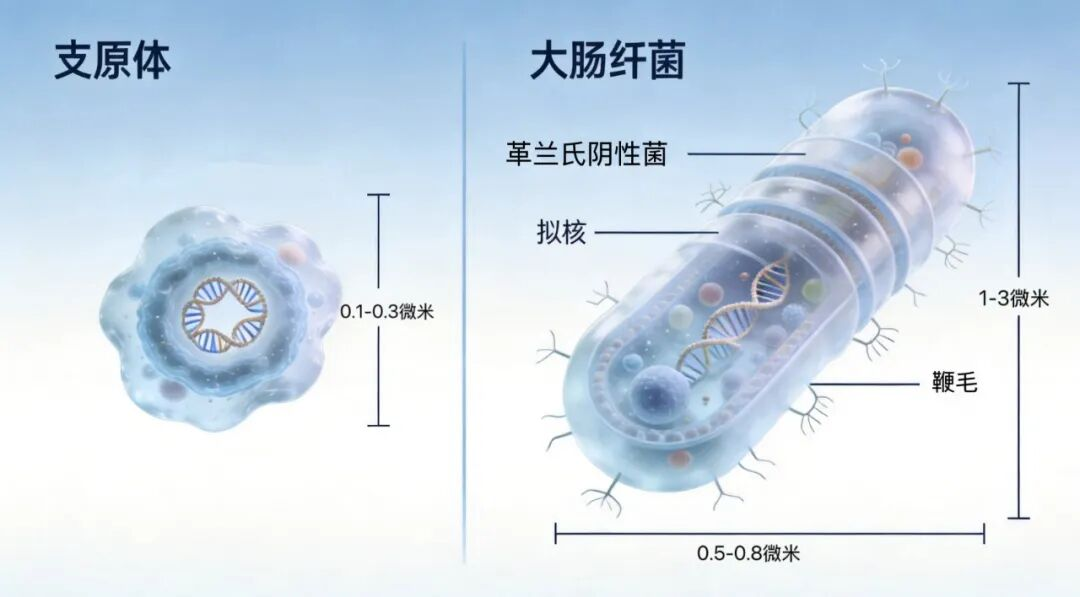 Figure 1: Comparative cellular architecture between cell-wall-deficient Mycoplasma (0.1–0.3 µm) and Gram-negative Escherichia coli (0.5–0.8 × 1–3 µm)
1. Mucosal Collapse: Ciliary Deciliation and Barrier Breakdown
Healthy avian respiratory mucosa is lined with rhythmic cilia functioning as continuous micro-sweepers to evacuate inhaled particulate dust and transient microbes. Pathogens such as Mycoplasma gallisepticum (MG) and Mycoplasma synoviae (MS) express specialized adhesins (including GapA and CrmA) that adhere tightly to tracheal epithelial cells. This direct attachment destroys cell membranes, triggering extensive ciliary paralysis, collapse, and detachment. Once the primary physical clearance apparatus is crippled, respiratory passages and air sacs are exposed directly to secondary pathogens.
2. Opportunistic Breakthrough: APEC Dissemination into Systemic Colisepticemia
With mucosal defenses compromised, ambient opportunistic bacteria—primarily Avian Pathogenic Escherichia coli (APEC) and Salmonella—traverse denuded membranes and delicate air sac walls, igniting acute airsacculitis (气囊炎). As the leading bacterial pathogen in systemic avian disease, APEC penetrates microvascular endothelium into the bloodstream, triggering acute colisepticemia. Widespread bacterial proliferation unleashes massive lipopolysaccharide (LPS) endotoxins, resulting in hyperpermeable microcirculation and systemic fibrinous exudation that accelerates clinical decay.
3. Devastating Clinical Signs and Severe Commercial Losses
Coinfections manifest in severe clinical deterioration:
• Visceral & Respiratory Damage: Afflicted birds exhibit peri-orbital edema ("goldfish eye" appearance) and harsh respiratory rales. Post-mortem examination reveals foamy abdominal exudates, with dense fibrinous pseudomembranes encapsulating heart and liver surfaces (fibrinous pericarditis and perihepatitis).
• Articular Crippling & Synovitis: Under MS and APEC coinfection, birds suffer severe lameness, recumbency, and breast blister bursitis, with synovial cavities filled with viscous yellow exudate or caseous debris.
• Surging Mortality & Abattoir Condemnation: Feed intake collapses, FCR surges exponentially, and subclinically affected carcasses are rejected on slaughter inspection lines, inflicting severe economic loss.
 Figure 2: Afflicted broiler exhibiting severe prostration, unkempt ruffled plumage, drooped wings, and huddling
⚠️ Antimicrobial Resistance (AMR): Why Conventional Antibiotics Frequently Falter
Producers have historically relied on combinations of enrofloxacin, tylosin, and lincomycin with broad-spectrum antimicrobials. However, decades of intensive usage have fueled widespread antimicrobial resistance (AMR). Clinical APEC isolates increasingly harbor extended-spectrum β-lactamases (ESBLs) and multidrug efflux pumps, rendering conventional protocols largely ineffective. The World Health Organization (WHO) has sounded global alarms on AMR, emphasizing the urgent mandate for non-chemical, precision biological alternatives.
2. The Biocontrol Solution: Bacteriophages as Precision Biological Guided Missiles
Confronting antibiotic resistance, bacteriophages—nature's dedicated predatory viruses refined over billions of years—offer four definitive biocontrol advantages:
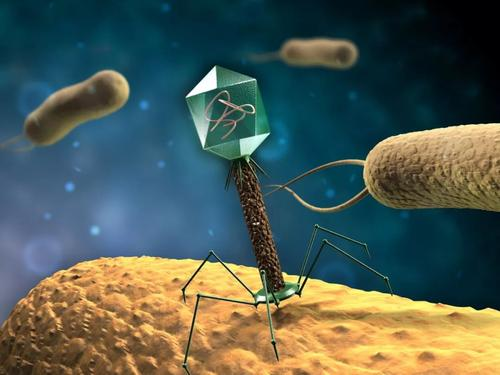 Figure 3: Bacteriophage tail fibers bind specific outer membrane receptors to shatter bacterial peptidoglycan walls
🎯 1. Bypassing AMR via Physical Nanoscale Lysis
Phage bactericidal action bypasses chemical biochemical pathways entirely. Phage tail fibers recognize surface receptors with nanoscale precision, inject genetic material, and utilize phage-encoded holins and endolysins to physically burst the peptidoglycan wall from within. A landmark study isolated and characterized broad-spectrum lytic phage vB_EcoM_SD350, demonstrating powerful lytic activity against 64% (48 of 75) of clinical MDR APEC isolates, including strains fully resistant to cefotaxime and gentamicin.
🌿 2. Gut Microbiome Preservation
While broad-spectrum antibiotics indiscriminately eradicate beneficial commensal flora—worsening enteric dysbiosis and post-infection diarrhea—bacteriophages exhibit strict host specificity. They target only virulent pathogen serotypes without disrupting eukaryotic host cells or beneficial Lactobacillus and Bifidobacterium populations.
🔄 3. In Situ Self-Amplification at Infection Foci
Unlike pharmaceuticals whose systemic concentrations degrade over metabolic clearance half-lives, bacteriophages multiply in situ wherever viable target pathogens reside in visceral foci (pericardium, liver, air sacs). Phage populations self-replicate exponentially until the bacterial reservoir is eradicated.
🛡️ 4. Pristine Biosafety & Genetic Purity
Whole-genome sequencing of selected therapeutic lytic phages (e.g., vB_EcoM_SD350) verifies total absence of bacterial toxins, virulence factors, or antibiotic resistance transfer genes. This non-transducing profile guarantees biological safety and compliance with international zero-residue regulatory mandates.
References
- HUANG Y, PANG Z, ZHU X, et al. Characterization and genomic analysis of a broad-spectrum lytic phage vB_EcoM_SD350 and its application on raw chicken and beef meats against Avian pathogenic Escherichia coli [J]. Food Science and Technology, 2025, 222: 117618.
During vulnerable windows of Mycoplasma and viral challenge, curbing secondary bacterial colisepticemia is decisive for flock survival and producer profitability. Confronting antibiotic failure, phage technology provides targeted precision, physical lysis, and microecological stewardship. Shandong New-Line Biotechnology Co., Ltd. builds upon a proprietary repository of 60,000+ characterized phage strains and 6 modern fermentation production lines, guaranteeing 99% purity and an 18-month shelf life to empower sustainable poultry production worldwide.




Shandong New-Line Biotechnology Co., Ltd.
Dedicated to industrial phage R&D and applications across agriculture and animal health, delivering global-leading green antimicrobial solutions.
Hotline: 0536-2201616 / +86-536-2201616
Websites: phages.cn / phages.biz